From Agentic AI to Creator-Driven Media: Key Marketing Takeaways from CES 2026
Published by Spinutech on January 14, 2026
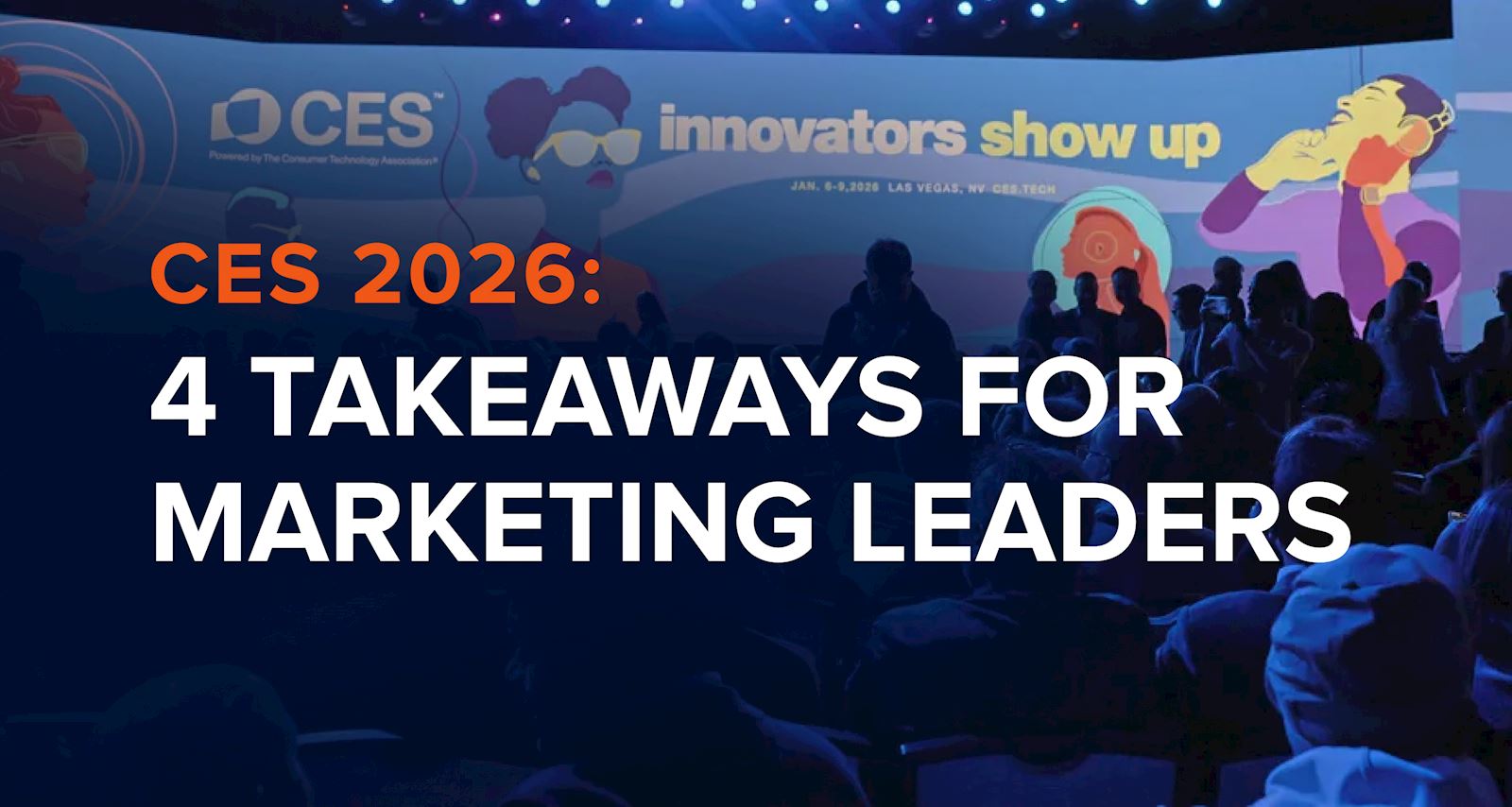
For years, CES has been a showcase of what could be possible.
2026 felt different.
Across marketing, media, and commerce conversations, the focus shifted away from shiny objects and toward something more consequential: How AI, retail data, and creators are actually changing day-to-day marketing execution today — and what needs to be operationalized next.
The dominant thread running through CES 2026 wasn’t novelty. It was maturity.
- Agentic AI moved from experimental pilots to early infrastructure.
- Retail media repositioned itself as the strategic backbone of the media plan.
- Creators evolved into full-funnel media partners.
- And creativity itself became a human-AI collaboration problem, not a production shortcut.
Here are the four key takeaways marketing leaders should carry into 2026:
1. Agentic AI Moves From Hype to Execution
Agentic AI — autonomous systems that can plan, buy, and optimize media — was the central marketing storyline at CES 2026. Panels and pilots demonstrated AI agents actively buying and selling media across CTV and digital environments, including early tests from major broadcasters and frameworks emerging from organizations like the IAB Tech Lab.
What stood out wasn’t just that agents are coming. It was how they’re being positioned.
Platforms such as Reddit unveiled AI-powered automated buying tools designed to be transparent and explainable — explicitly rejecting the “black box” optimization model. This signals a broader industry reality: Visible, interpretable AI will be table stakes for advertiser trust.
But the takeaway for brands isn’t to rush headlong into full autonomy.
The smartest path forward in 2026 looks like:
- Constrained pilots focused on specific functions (audience discovery, bid optimization, creative testing)
- Clear human ownership of objectives, guardrails, and brand safety
- Measurement frameworks that show why decisions were made, not just outcomes
Agentic AI isn’t replacing marketers. It’s redefining where human judgment matters most.
2. Retail Media Becomes the Spine of the Media Plan
Retail media conversations at CES made one thing clear: This channel is no longer just a lower-funnel tactic.
Retail media leaders emphasized that the next phase of growth is off-site — using retailer purchase and behavioral data to power national, upper-funnel campaigns across CTV, social, and the open web. In this model, retail media isn’t a destination. It’s a strategy layer.
The implication is significant. Retail data is increasingly positioned as:
- The audience foundation for media planning
- A core input to creative relevance
- A primary measurement signal across channels
However, this evolution is colliding with a major constraint: Measurement inconsistency. Studies cited at CES showed ROAS variances of more than 60% across retail media networks due to differences in attribution and methodology. That level of variance is no longer tolerable for enterprise marketers.
As a result, pressure is mounting for:
- Greater standardization across networks
- Partnerships that enable cross-retailer measurement
- Clearer separation between media performance and retail margin math
In 2026, brands that win won’t treat retail media as “another channel.” They’ll treat it as connective tissue — linking data, media, and outcomes across the entire plan.
3. Creators Evolve Into Full-Funnel Media Partners
At CES, creators were no longer framed as influencers. They were framed as media companies.
Marketers discussed buying creator audiences through multiple routes:
- Direct sponsorships
- Programmatic audience buys
- Private marketplace (PMP) deals spanning creator networks
- Streaming, podcast, and CTV integrations
What matters is no longer the tactic — it’s the audience.
The same audience segment (say, reality-TV superfans) might now be reached through:
- A creator partnership
- A CTV PMP
- A DSP audience activation
- Social amplification tied to retail outcomes
This exposes a critical execution challenge: Integrated planning and frequency management. Without it, brands risk overexposure, fragmented measurement, and inefficient spend.
The shift in 2026 is from one-off influencer activations to enterprise-level creator strategies — planned, bought, and measured on the same footing as traditional media. Brand lift, consideration, and sales impact are becoming non-negotiable metrics, not “nice-to-have” add-ons.
4. AI-Augmented Creativity and the “Brief-to-Breakthrough” Moment
Creativity at CES 2026 wasn’t positioned as something AI would replace — but something AI would accelerate.
Keynotes from creative leaders emphasized the convergence of technology and human ingenuity. The future isn’t machine-generated ideas. It’s faster paths from insight to breakthrough.
New AI creative platforms showcased at CES are designed to compress the journey from brief to concept — helping teams explore more ideas, more quickly, while preserving human control over strategy, tone, and brand voice.
This acceleration creates a new leadership responsibility: Governance.
2026 should be the year brands formalize AI-in-creative guidelines, including:
- Which stages use AI (briefing, concepting, versioning, personalization)
- Disclosure and IP considerations
- Quality and effectiveness metrics beyond pure production efficiency
The brands that get this right won’t just move faster. They’ll move smarter—using AI to unlock creativity, not dilute it.
The Bigger Picture: Infrastructure Over Innovation Theater
The throughline at CES 2026 was clear. Marketing leaders are done chasing novelty. The conversation has shifted to execution, trust, and integration.
AI is becoming infrastructure. Retail data is becoming strategy. Creators are becoming media systems. Creativity is becoming a human-AI partnership. And experiences are expanding beyond traditional digital boundaries.
The brands that will win in 2026 aren’t the ones doing everything first. They’re the ones making deliberate, disciplined moves now — testing, governing, and integrating these capabilities into how marketing actually works.
CES didn’t show us a distant future. It showed us the work ahead.