How to Lower Your Google Ads Costs Without Cutting Spend
Published by Spinutech on September 25, 2026
When CPCs rise and budgets remain flat, cutting spend can feel like the obvious answer. But lower spend and lower cost aren’t the same thing.
In many Google Ads accounts, the bigger opportunity is already hiding within the budget. Money is reaching searches that never convert, geographies that underperform, or traffic that looks productive until lead quality enters the conversation. Strong paid search management concentrates that same budget where it has a better chance to produce revenue.
Here are the levers worth pulling before you reach for the budget scissors.
Key Takeaways
- Cheaper clicks matter less than cheaper qualified conversions.
- Waste already happening within the account is usually the first place to look.
- Greater relevance can improve cost without intentionally shrinking reach.
- Conversion rate makes every paid click more valuable.
- Automation follows the signals you feed it, including the bad ones.
A Cheaper Click Isn’t the Same as a Cheaper Customer
CPC is useful for diagnosis. Cost per qualified conversion tells you much more about whether the business is getting its money’s worth.
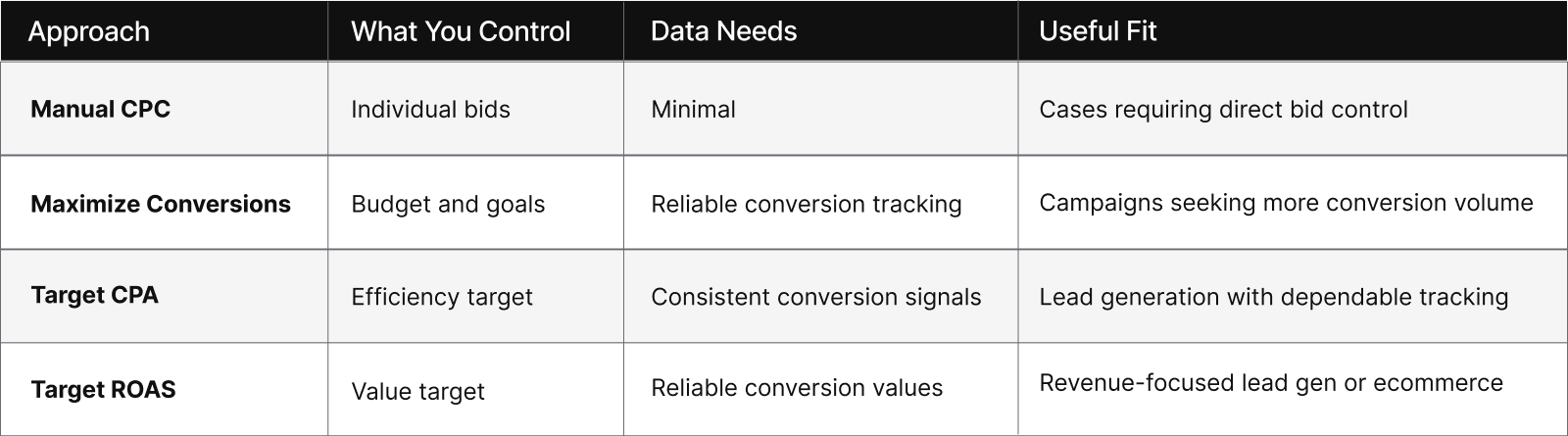
That distinction is important because cheap traffic can become expensive quickly when nobody converts. And if your campaigns use Smart Bidding, the usual advice to simply lower keyword bids is outdated. Google sets bids at auction time based on conversion or value goals, so there may be no manual keyword bid waiting for you to trim.
Start with one account-level question. What percentage of last quarter’s spend went toward search terms, locations, or placements that produced zero qualified conversions?
That figure gives you a practical view of how much spend could potentially be redirected before touching the overall budget. Lowering CPC without sacrificing qualified volume is a useful goal, but an arbitrary CPC target can send optimization in exactly the wrong direction.
Cut the Spend That Was Never Going to Convert
Mine Your Search Terms Report on a Schedule
The keywords you target and the searches you pay for aren’t always the same thing. Broad match widens that gap, while Performance Max can reach search demand beyond a traditional keyword list. Google’s search terms reporting can surface irrelevant queries that belong on a negative keyword list.
Build negatives around recurring themes and review them consistently. Cadence beats the heroic once-a-year cleanup. Our approach to Performance Max optimization follows the same principle because automation needs regular steering as the search landscape changes.
Revisit the Targeting Settings Everyone Forgot About
Location settings are an easy place for wasted spend to hide. Google can target people physically in an area or people who’ve simply shown interest in it, depending on your settings.
Review device performance and ad schedules alongside geography. Then look at Search Partners and expansion settings through the same lens. The purpose is reallocation. Your paid media program should concentrate investment around qualified outcomes rather than distribute money evenly because the campaign structure says so.
Keep brand and non-brand reporting separate, too. Cheap branded traffic can make blended CPC look healthy while expensive non-brand campaigns quietly eat lunch in the break room.
How to Lower CPC in Google Ads With Relevance
Google evaluates expected CTR, ad relevance, and landing page experience when assessing ad quality. Better ad quality can contribute to better positions and lower costs, which makes relevance one of the few efficiency levers that doesn’t depend on deliberately reducing reach.
Make the Search, Ad, and Page Tell the Same Story
Take your five highest-spend keywords and pretend you made each search yourself. Read the ad. Click through mentally to the landing page. Does the page immediately deliver the promise that earned the click?
If an ad answers a specific need and drops the visitor onto a generic homepage, the chain breaks. Tight keyword themes help align the message, while focused landing pages keep that relevance going after the click. Google recommends matching landing pages closely to the ad and search intent.
Page speed belongs in the conversation for the same reason. You already paid for the visitor. Making them wait is an expensive way to test their patience.
Conversion Rate Multiplies Everything Else
Keep spend and CPC identical and lift conversion rate from 2% to 3%. Cost per conversion falls by one-third. That math is why conversion rate optimization belongs in a Google Ads cost conversation. Once someone clicks, the page determines how much value that traffic can produce.
Start where friction is easiest to feel. Shorten an unnecessarily demanding form. Sharpen the offer and give the visitor one obvious next move. Strong proof near the decision point can answer hesitation before it becomes an exit.
The payoff also carries beyond paid media. Better landing page optimization can improve the same experiences reached through organic search or email.
Reallocate Your Budget Before You Ask for More
Treat the account more like a portfolio. Rank campaigns by cost per qualified conversion, then examine where another dollar has the strongest chance to produce another valuable result.
Lost impression share due to budget deserves attention, but it isn’t automatically a request for more money. A strong campaign may be budget-starved while weaker campaigns continue receiving funds simply because nobody has moved them.
Account structure is critical here, too. Too many thin campaigns can fragment useful conversion signals and make optimization harder to read. Consolidation can give both your team and Google’s automation a clearer picture of performance.
Good analytics makes those reallocations easier to defend because the conversation moves beyond platform activity and into business value.
Automation Only Saves Money With Clean Data
Smart Bidding and Performance Max optimize toward the conversion signals and values you provide. Google specifically recommends trustworthy conversion data and business-relevant values for automated campaigns. Modern AI-powered paid media works best when the algorithm can distinguish meaningful outcomes from noise.
Clean Up Data and Put Guardrails on Performance Max
Duplicate conversions and low-value actions can teach automation the wrong lesson. Offline conversion imports and CRM-fed lead quality help Google learn which traffic deserves more investment. The same readiness principle matters as newer capabilities such as Google AI Max expand paid search automation.
Performance Max also has real controls. Brand exclusions and negative keywords can tighten where campaigns appear, while placement reviews help protect relevance.
The question for any agency is simple. How will you teach Google to optimize toward revenue quality rather than form-fill volume?
Efficiency Is a Strategy, Not a Spending Cut
Lowering Google Ads costs starts with eliminating wasted traffic, then improving the value of the clicks you keep. Relevance strengthens the auction. CRO makes each visit work harder. Better measurement gives automation something worth learning from.
That’s ongoing Google Ads management, not a one-time cost-cutting exercise. Our status as a Google Premier Partner for the tenth consecutive year reflects the performance standards behind that work. In 2026, Google Premier Partner status is reserved for the top 3% of participating partners nationwide.
Wondering how much of your current budget is pointed in the wrong direction? Work with us to find the waste and make the spend you already have work harder.